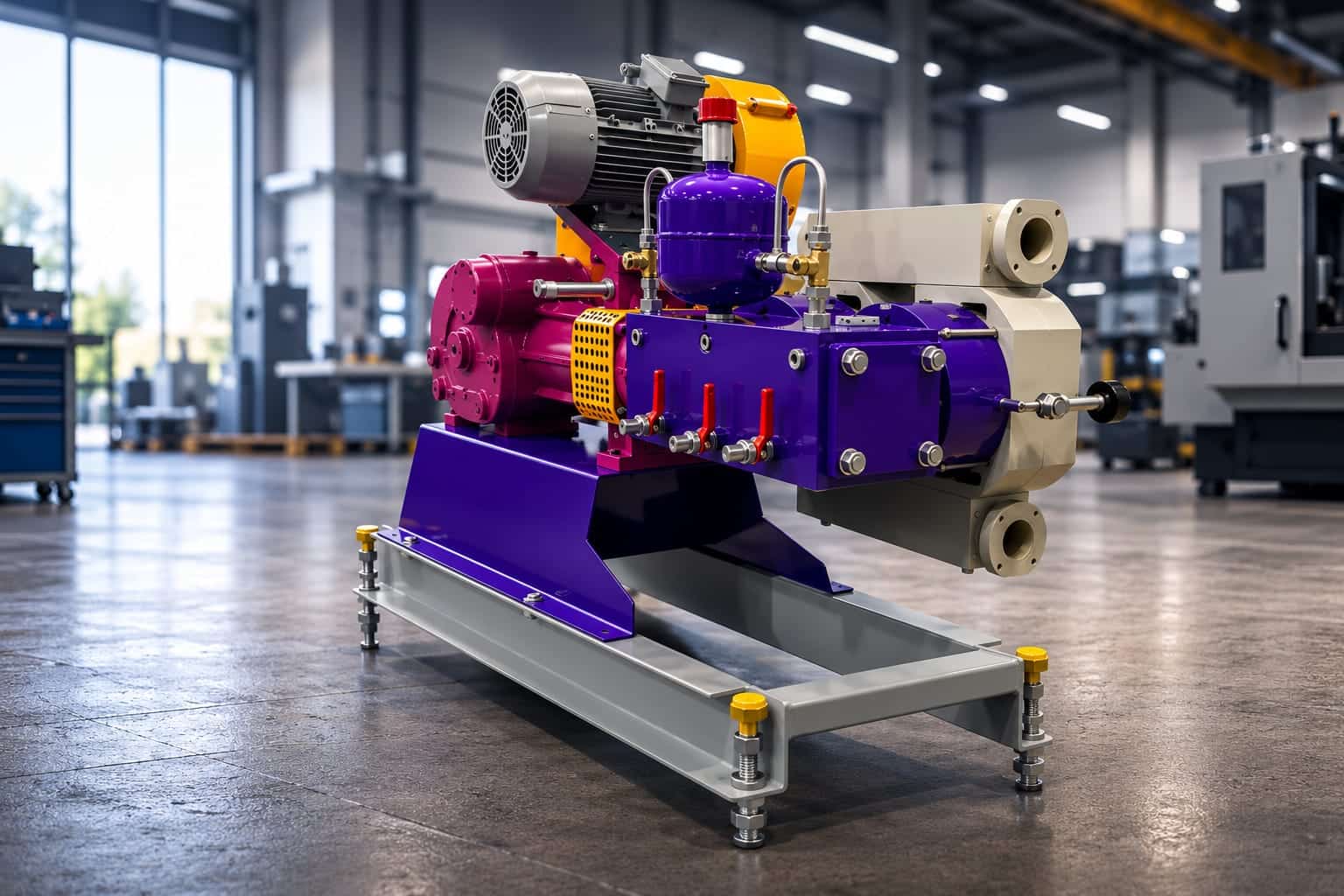
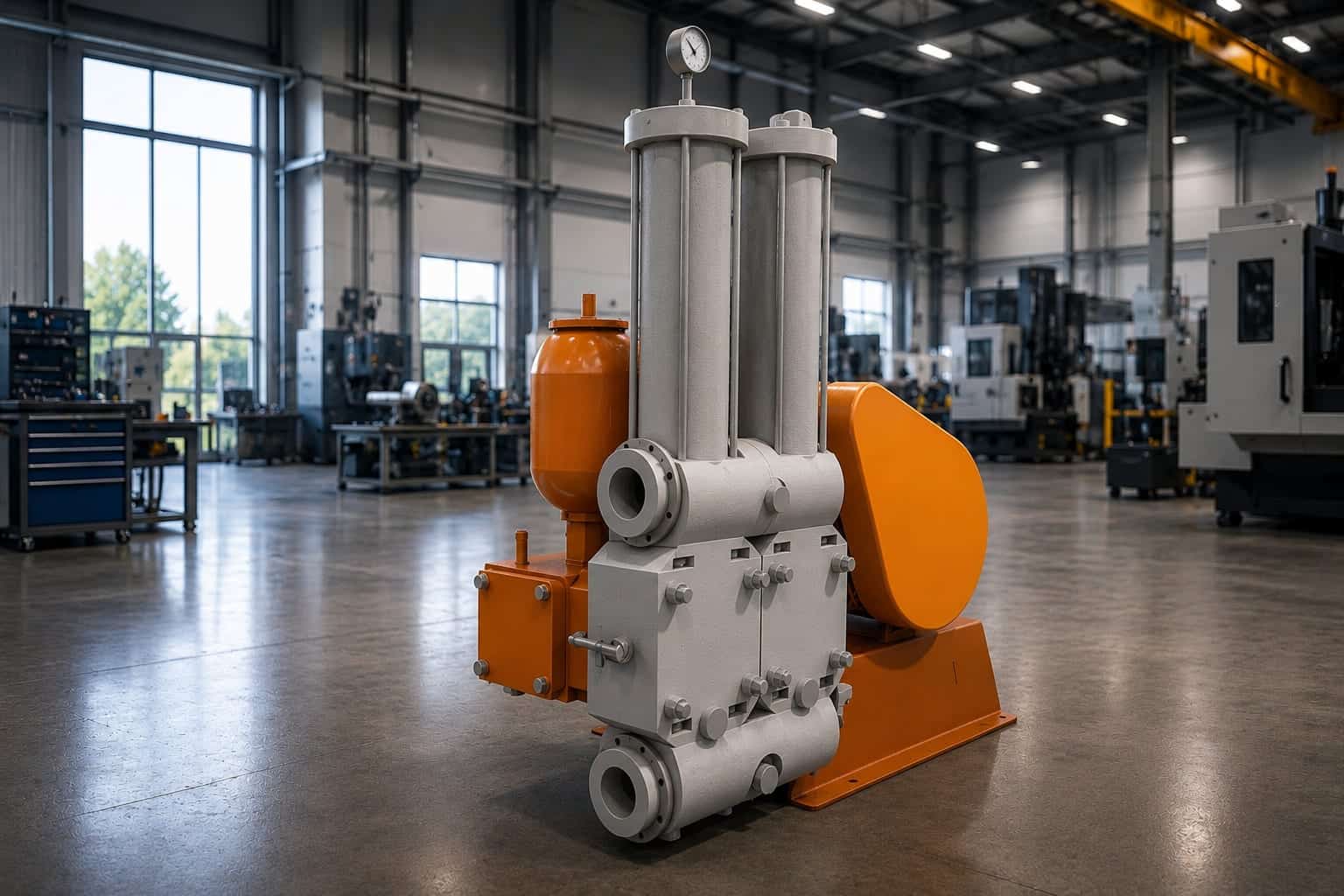
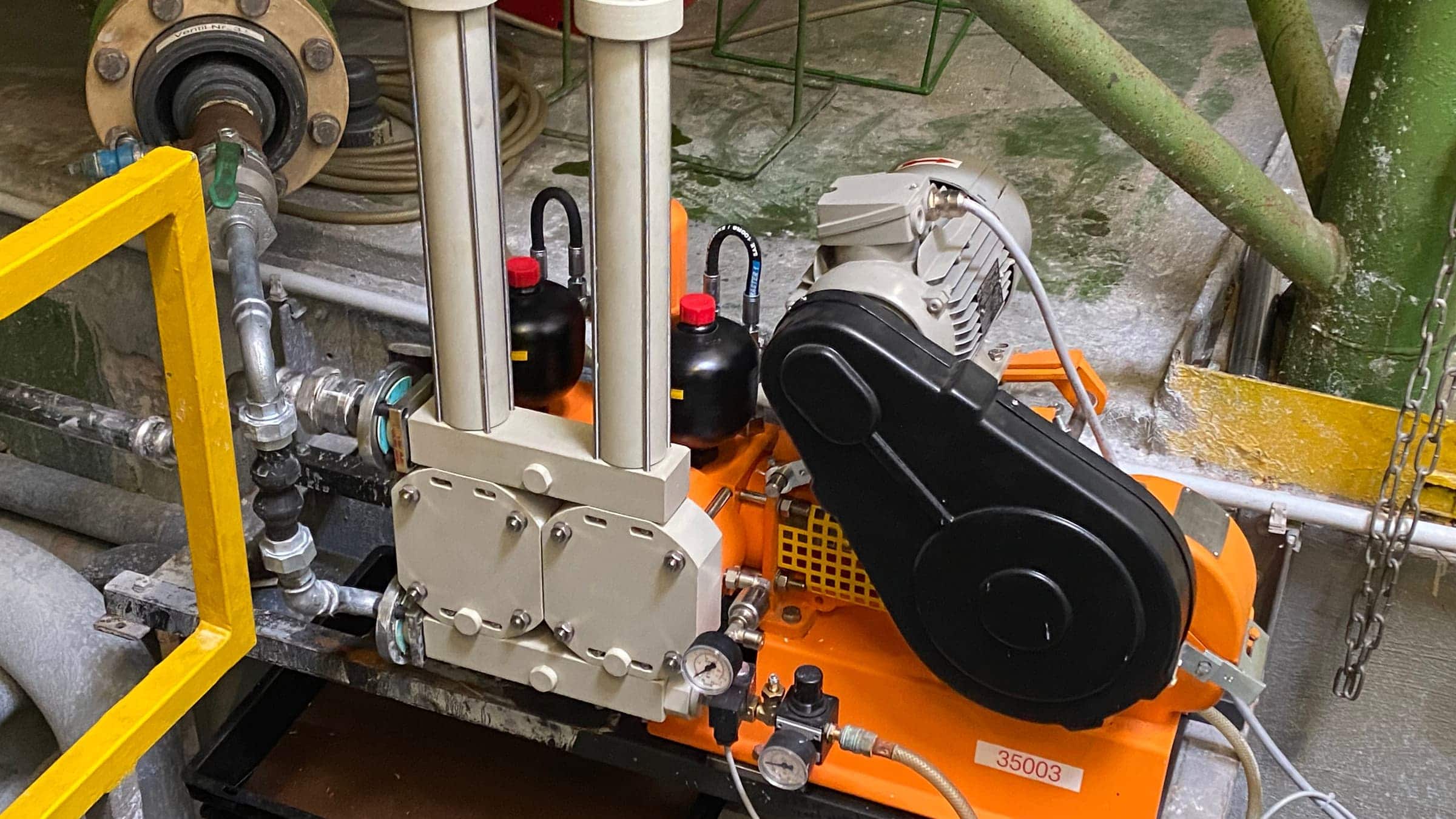
Surface treatment · Model FP · size FP20
Plug & play pump on a filter press — for optimal feed in electroplating
An electroplating plant fed its chamber filter press with a progressive cavity pump for many years. It served only as a filling pump — the actual filtration pressure then had to be generated with compressed air.
Customer
Electroplating plant, Germany
Range used
Model FP · size FP20
1.1 kW
motor rating of the pump
0
wear part replacements since commissioning
0
damage after a blocked suction line
Technical data
- Industry
- Surface treatment, electroplating
- Plant
- Chamber filter press
- Process step
- Filter press feed
- Medium
- Electroplating sludge, abrasive
- pH value
- usually neutral
- Operating mode
- Shift operation
- Materials
- PP and PE
- Motor rating
- 1.1 kW
- Previously in use
- Progressive cavity pump
- Implemented
- 2026
Starting point
For many years a progressive cavity pump fed the chamber filter press of an electroplating plant. The medium — electroplating sludge — is abrasive, and that is exactly what wore the design down: rotor, stator and mechanical seal deteriorated, particularly as operating pressure rose towards the end of a cycle. Recurring damage from dry running came on top.
The wear rarely stayed without consequence. It showed first as declining output, later as leakage and finally as a repair job.
The second point was more fundamental: the pump only ever acted as a filling pump. The pressure that filtration actually requires then had to be supplied by compressed air — one of the most expensive forms of energy in a works. And adjusting the flow rate over the course of a cycle would have required additional instrumentation and control.
Solution
A Model FP in size FP20 has been in operation since, with wetted parts made of polypropylene and polyethylene.
No rotating component moves inside the medium. That removes rotor, stator and mechanical seal — precisely the parts that used to wear, and precisely when pressure rises.
The decisive factor for the process is the hydraulic control: the pump adjusts its output to the fill state of the press by itself. At the start of a cycle it delivers a high flow against little back pressure, towards the end less flow at high pressure — and it builds that pressure itself. The press receives the right quantity in every phase, without any instrumentation being retrofitted. The detour via compressed air is gone.
During integration, the available space and effective pulsation damping were the constraints. HODD carried out commissioning together with the operator, including training.
Result
The most telling moment came during commissioning itself. Hardened deposits blocked the suction line. The pump could no longer convey — but took no damage. Once the blockage was cleared it resumed immediately, with no repair and no wear part replaced. With the previous pump, the same incident would have meant an overhaul.
In day-to-day operation the operator reports a shorter cycle time and a drier filter cake. No wear parts have needed replacing so far. The pump runs on a 1.1 kW motor.
For context: no measured before-and-after figures exist for cycle time, residual moisture or energy consumption — the operator did not record the previous state. These statements reflect their assessment. The changeover took place in 2026; statements on service life refer to the period since commissioning.
From the project
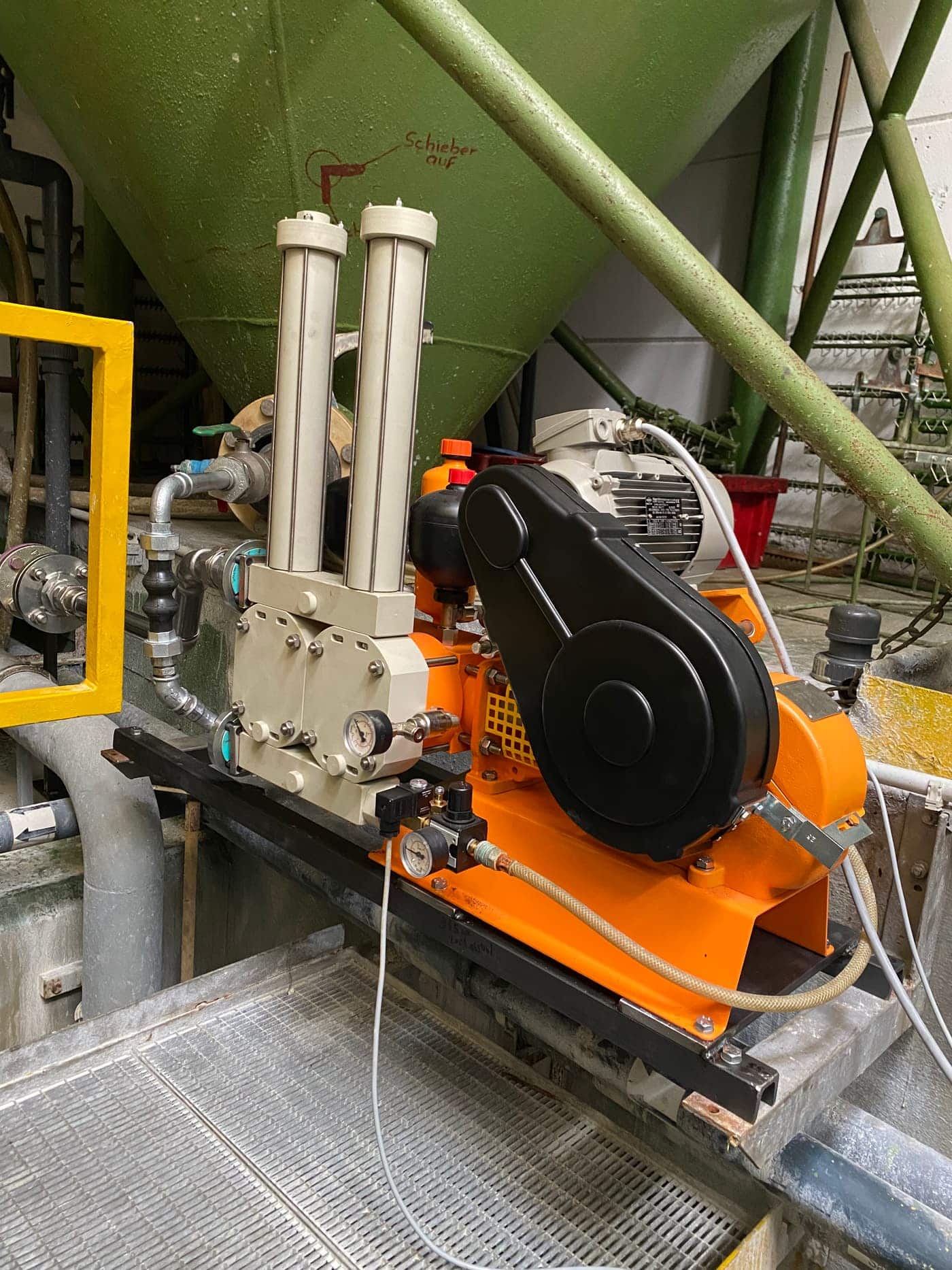
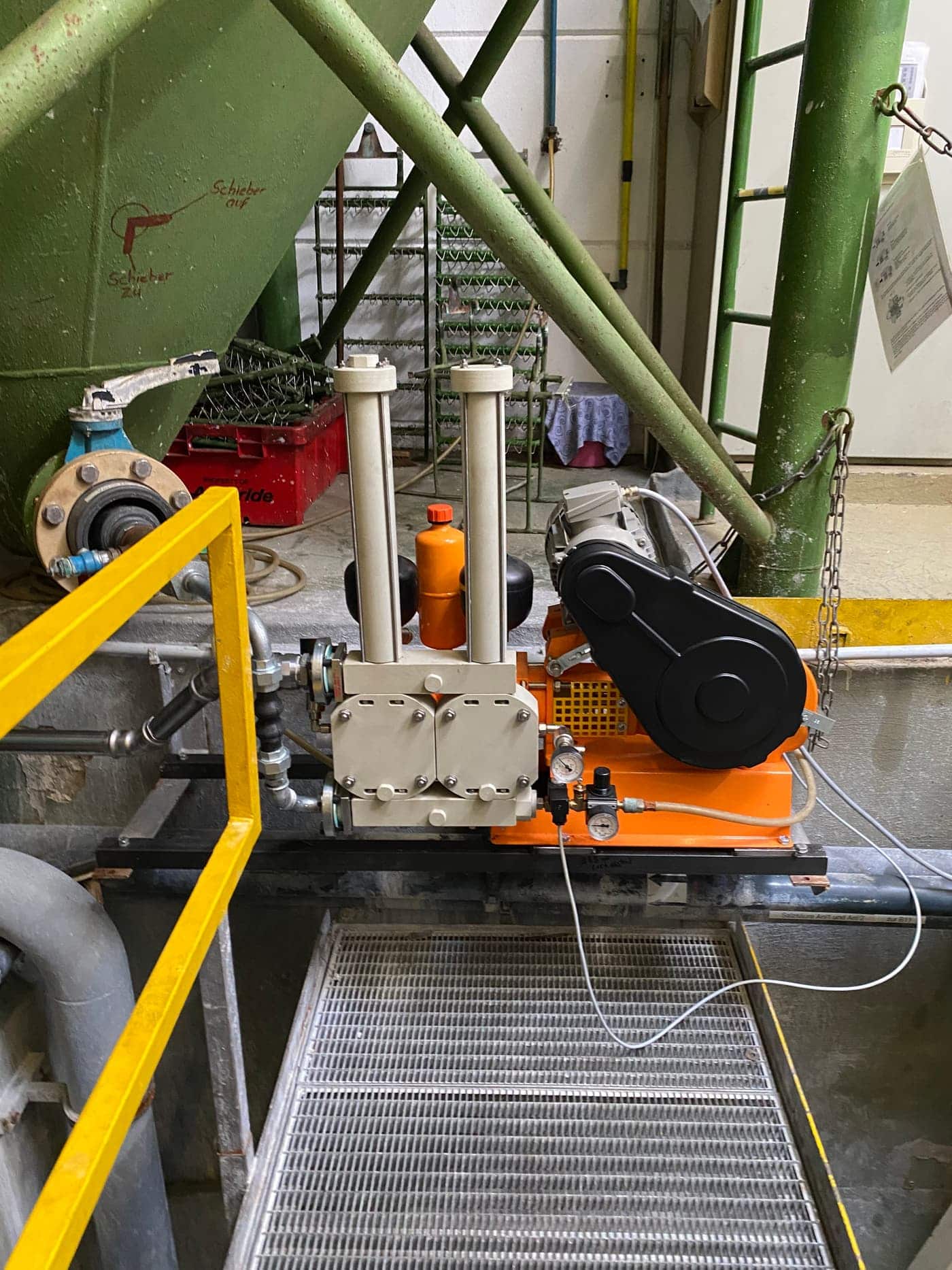
From the field
Success Stories
Contact
We are happy to advise you personally — simply send us your enquiry via the form. For reliable sizing it helps us to have details on the medium, solids content, flow rate and pressure requirement.