Construction industry · Model TP · size TP32
When the finest particles grind away every seal
Silicate slurries are among the most demanding media in process engineering. Precisely because their particles are so small, they reach into every sealing gap — and act there like an abrasive.
Customer
Building materials manufacturer, Germany
Range used
Model TP · size TP32
0
Mechanical seals in the pumped medium
several thousand €
Cost per failure previously
up to 30 %
Solids content of the medium
Technical data
- Industry
- Construction industry
- Region
- Germany
- Process step
- Transfer and filling
- Medium
- silicate slurry, alkaline
- Solids content
- up to 30 %
- Particle size
- 0.3–5 nm
- Density
- 1.3 kg/dm³
- Temperature
- 30 °C
- Operating mode
- shift operation
- Materials
- PP and PE
- Previously in use
- progressive cavity pump
- Implementation
- 2026
The starting point
Silicate slurries consist of the finest mineral particles suspended in a liquid. In this case they are in the nanometre range, at a solids content of up to 30 per cent. That fineness is exactly the problem: the particles reach sealing gaps that no coarse grain would ever enter.
A progressive cavity pump currently handles the duty. In its mechanical seal, the silicate particles acted like an abrasive and continuously wore down the sealing faces. The consequences came as a chain: growing leakage, falling service life, rising maintenance effort. The medium's tendency to crystallise made it worse, putting additional load on sealing faces and moving parts. Rotor and stator wore as well. The operator puts the cost of a single failure at several thousand euros — and failures kept coming.
A second problem was just as tiresome in daily operation: the alkaline medium foams when air is drawn in. The foam extended the filling time per canister, and whatever overflowed was lost.
Investigated first, then engineered
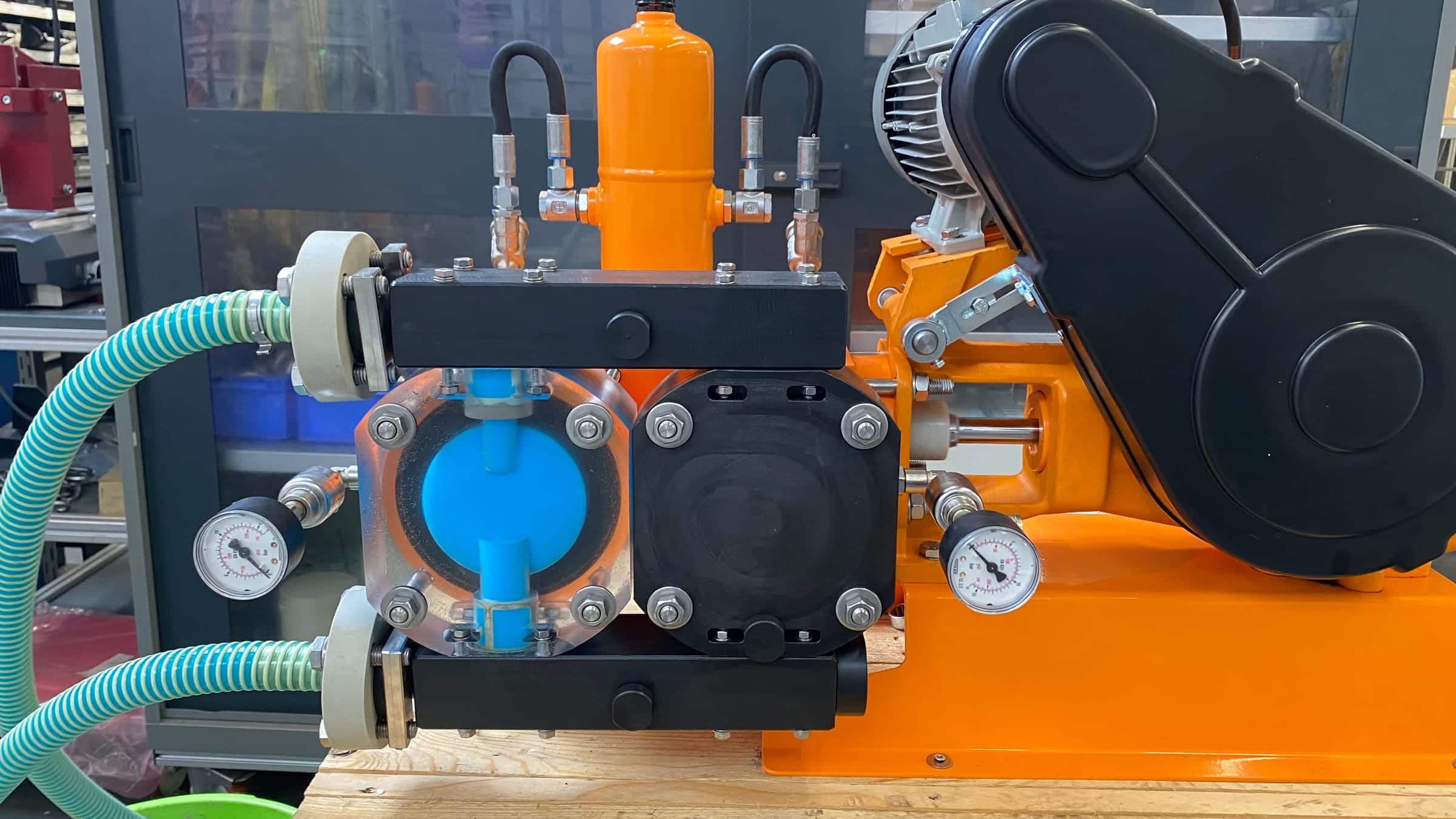
Before a suitable pump was identified, the slurry was investigated in the HODD test facility under realistic conditions. Three questions were central: how does the medium behave while being pumped, how strongly does it foam, and what does that mean for the hydraulics of the pump?
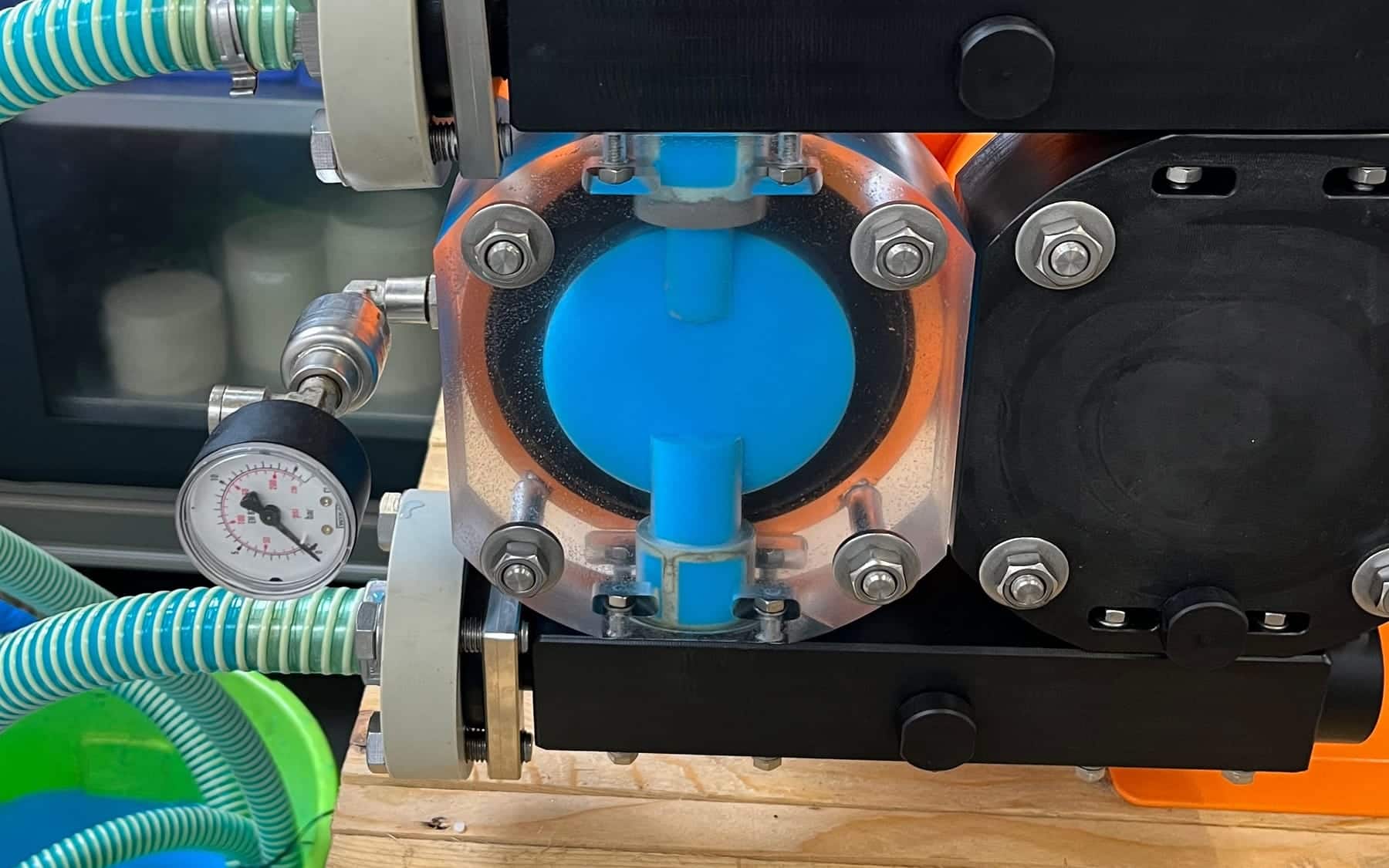
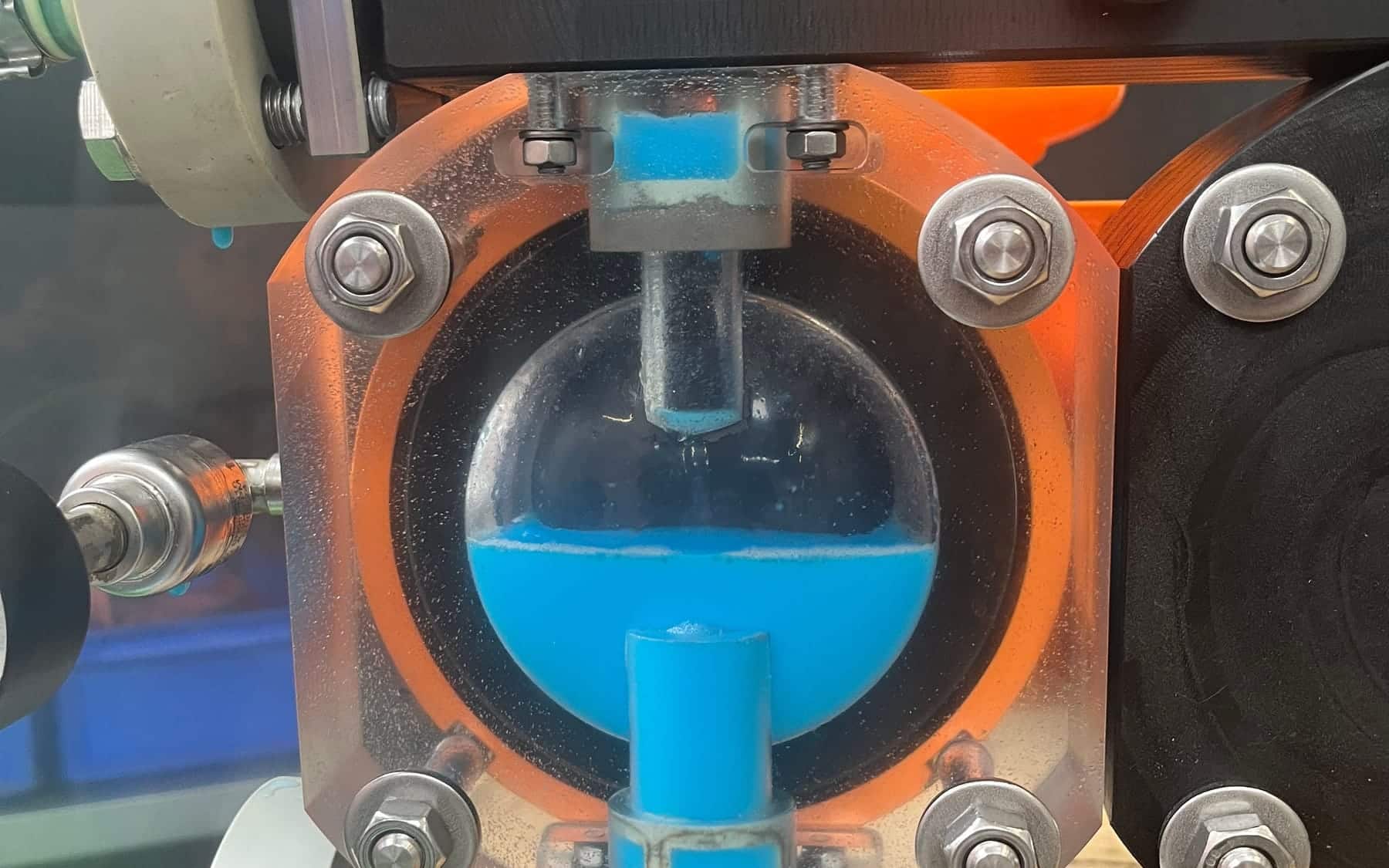
The test rig works with a transparent pump head. That makes visible in operation what normally stays hidden: how the chamber fills, how the medium behaves during the stroke, whether and where air is drawn in. The photographs on this page come from those trials; the blue dye makes the fill level inside the head readable.
Only on that basis was the concept for the pump developed.
The solution
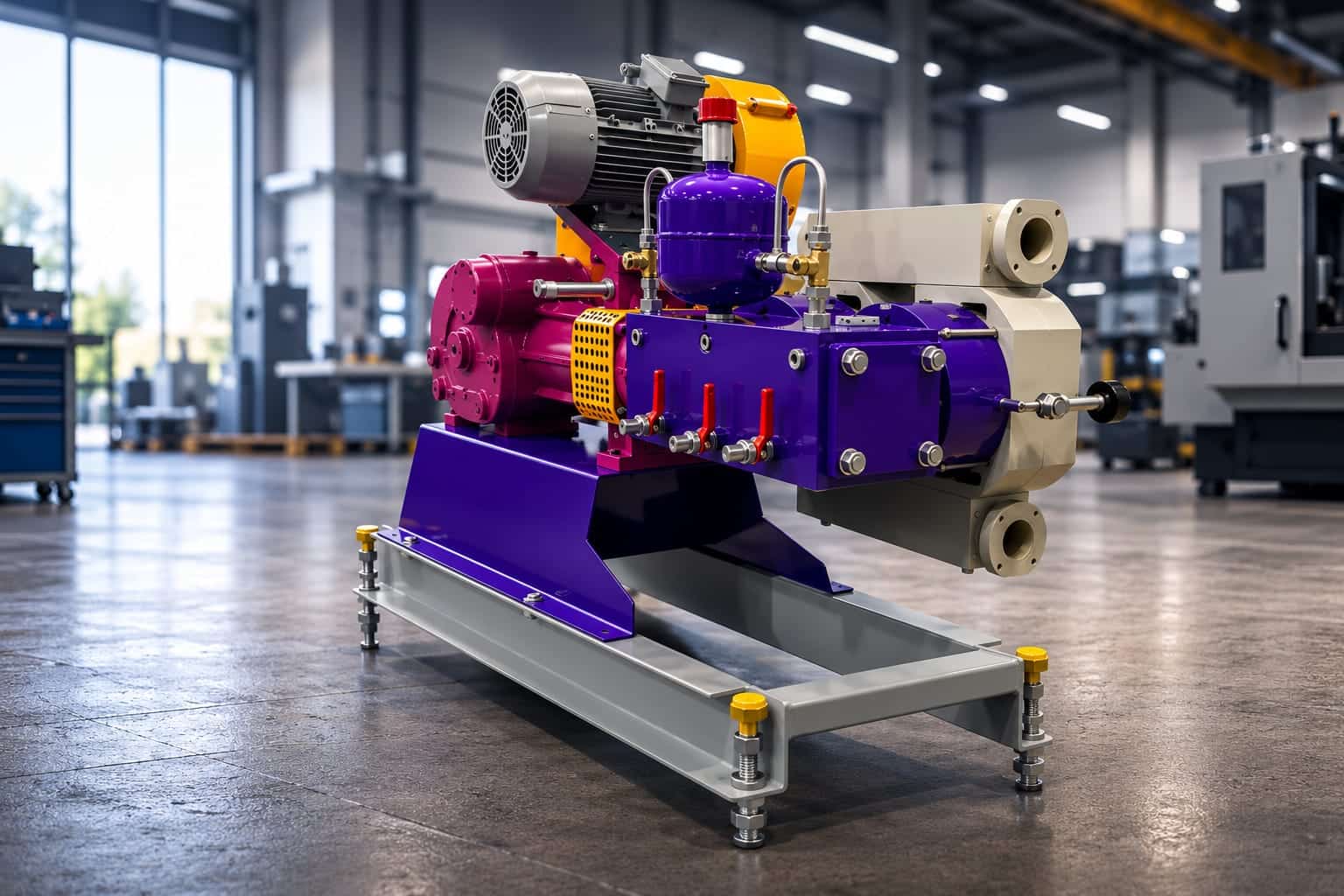
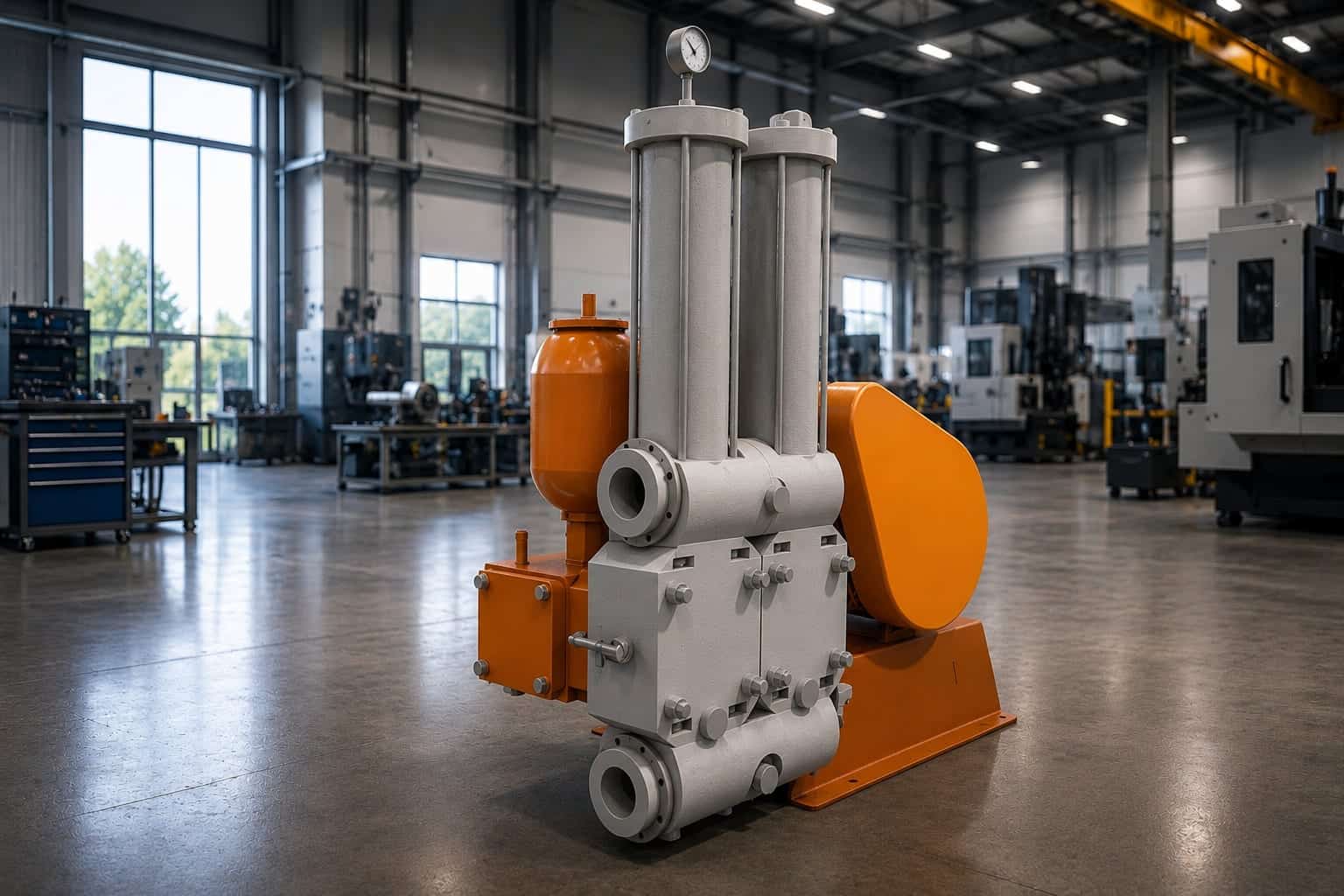
The ideal solution is a Model TP–type pump, with wetted parts in polypropylene and polyethylene.
The decisive design feature is an absence: no rotating shaft and no mechanical seal work inside the pumped medium. That removes exactly the place where the silicate particles previously settled and wore down the sealing faces. It simply no longer exists.
A second property addresses the foaming: flow velocities inside the pump are low. The medium is handled more gently, and less air is drawn in than with a design that accelerates it.
The result
The operator receives a proposed solution whose design rests on trials with their own medium rather than on a data sheet. The wear point that previously caused recurring cost is no longer present by design.
One note for context: implementation is planned for 2026. The statements on wear, foaming and energy demand rest on the trials in the test facility and on the design of the pump, not on measurements in running plant operation.
From the project
From the field
Success Stories
Contact
We are happy to advise you personally — simply send us your enquiry via the form. For reliable sizing it helps us to have details on the medium, solids content, flow rate and pressure requirement.