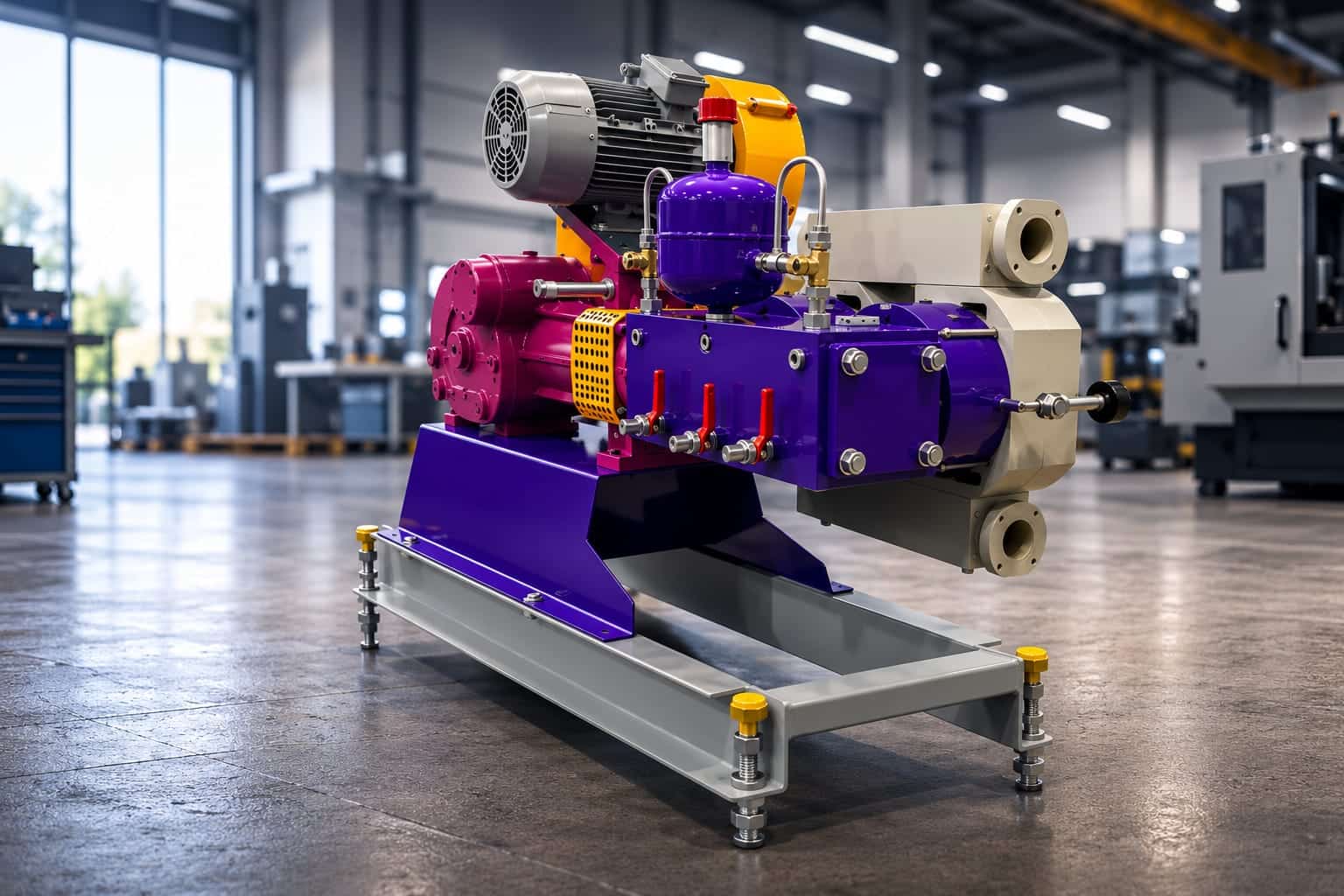
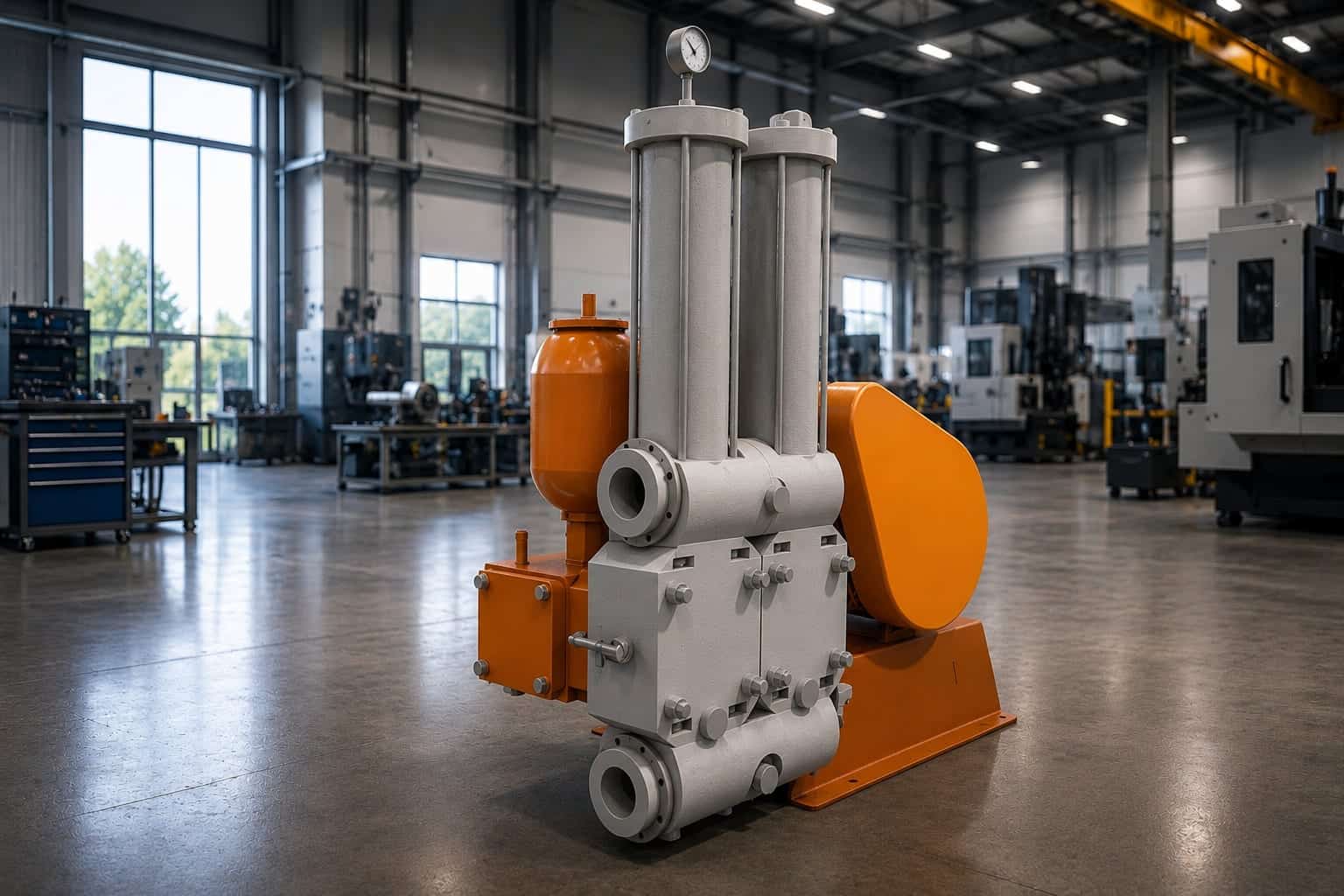
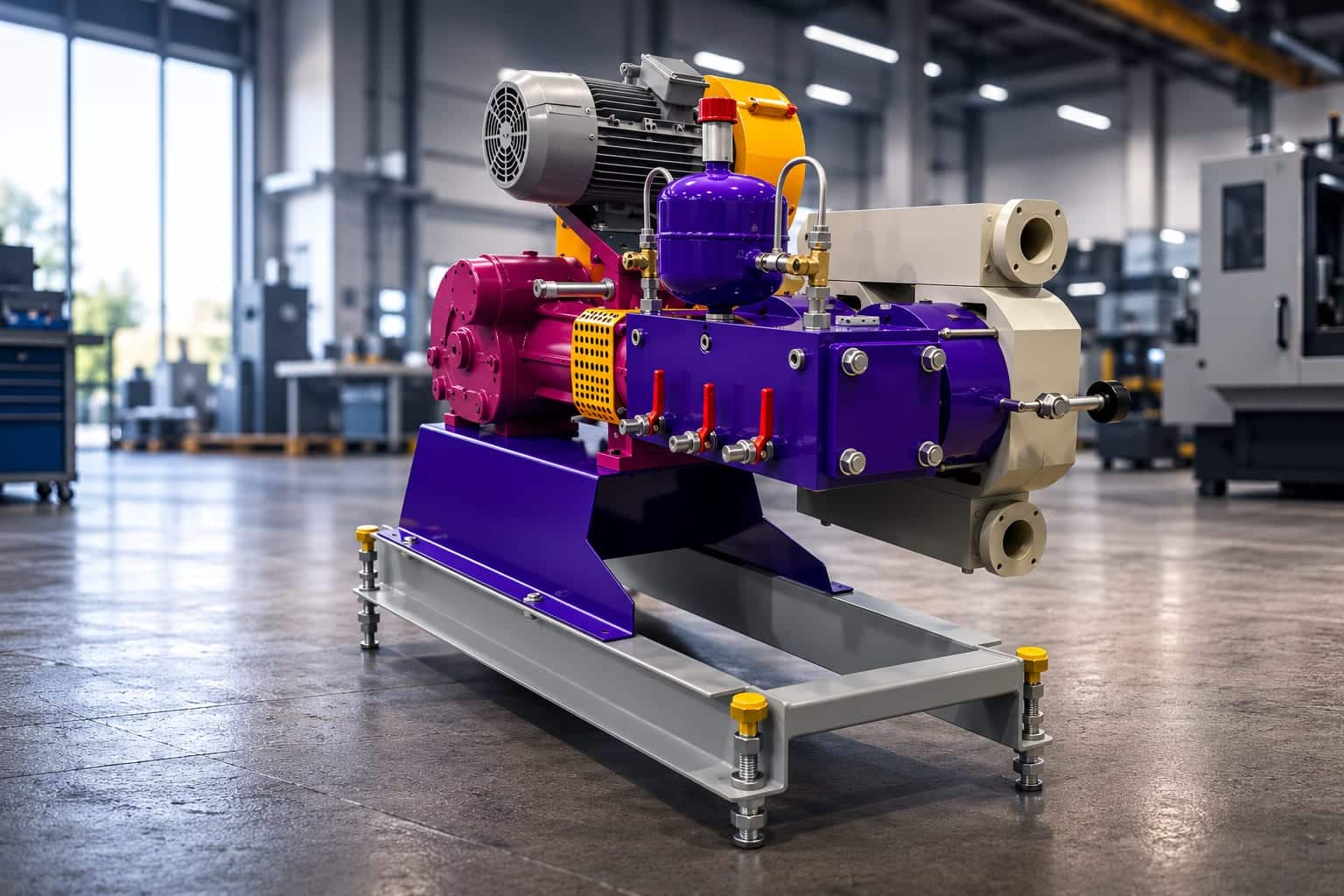
Transfer pump
Model TP
The transfer pump for media that wear other pumps out: solids-laden, abrasive, corrosive. Hydraulically operated, hermetically sealed, dry-run safe.
Conveying under difficult conditions
Dry-run safe
Emptied vessels and start-up phases without medium are not a damage case.
Hermetically sealed
No leakage path to the outside — safety when handling critical media.
Tolerant of solids
Designed to resist wear for slurries with changing solids content.
Low-loss drive
Hydraulic instead of air-operated — energy is transferred directly.
A transfer pump for the difficult media
Transfer tasks sound simple at first: a medium is to go from A to B. In practice, however, it is the medium that determines how long a pump lasts. Slurries with a high solids content attack impellers and seals, corrosive liquids take their toll on the materials, and changing operating states push pumps to limits they were never designed for.
Model TP starts exactly here. The pump works according to the patent-pending hydraulic double diaphragm principle: two diaphragms displace volume alternately, driven by a hydraulic circuit. The medium only touches the wetted parts made of chemically resistant plastic and the diaphragms — the drive remains completely separated.
Robust against operating states that destroy other pumps
The decisive difference does not show in normal operation but in the exceptions. An accidentally blocked or closed suction line is a damage case for many pump designs. Not for Model TP: thanks to the patent-pending design principle, the pump remains protected and takes no damage even with the suction line closed.
The same applies to dry running. An emptied feed vessel, starting against a line that is still empty, the end of a batch — all situations in which conventional pumps take damage. Model TP is designed to be dry-run safe and survives these states without intervention.
In practical terms this means: fewer unplanned downtimes, fewer service calls and considerably less dependence on everything running exactly to plan in operation.
Sealed on the outside, resistant on the inside
With critical media, the question of tightness is not a matter of convenience but a matter of safety. Model TP is of hermetically sealed design. There is no dynamic shaft seal through which medium could reach the outside — and therefore no wearing part that gradually loses precisely this function in operation.
On the media side, chemically resistant plastics provide resilience against corrosive and aggressive process conditions. Combined with the wear-resistant design, this results in a pump designed against both chemical and mechanical attack — the typical dual load with abrasive, aggressive slurries.
Energy that actually arrives
Within its optimal performance range, Model TP converts the energy applied into flow with particular efficiency. The electric drive, minimal internal friction losses and a high hydraulic efficiency ensure that hardly any energy is lost.
Especially at small to medium flow rates, the HODD pump leaves many other pump types behind in terms of efficiency. That saves energy, lowers operating costs and makes efficiency the easiest of exercises.
Key figures
What the series delivers
The following figures apply across both series and all frame sizes. The specific design of your pump — flow rate, connection sizes, materials — comes with the technical data sheet we send in response to your enquiry.
- Solids content
- up to 50 %
- Depending on the size and shape of the solids. The pump handles liquids carrying solids.
- Particle size
- up to 30 % of the pipe diameter
- At DN 100 that corresponds to roughly 30 mm.
- Average valve speed
- max. 3–4 km/h
- Limited by design. The comparatively low speed keeps wear on the valve seat and valve cage low.
- Operating pressure
- up to 16 bar
- Without affecting diaphragm life: the diaphragm is hydraulically guided and stays close to force-free.
- Residual pulsation
- below 10 %
- In the standard configuration with a dampener. Where less is required, the dampener can be designed for below 1 %.
- Dampener recommended above
- approx. 6 bar
- Below that, most applications run without a pulsation dampener.
- Overall efficiency
- above 90 %
- At the best efficiency point — large frame size, high pressure, pump fully utilised. Calculated including mechanical losses, not just inside the pump head.
- Diaphragm rupture detection
- standard
- An analogue indicator is part of the standard scope; electronic monitoring is available as an option.
All figures describe the design, not a single duty point. Which values your process reaches depends on the medium, the solids content and the operating profile.
Frequently asked questions
Which media is Model TP designed for?
For difficult media: slurries containing solids, abrasive sludges as well as corrosive and aggressive liquids. The wetted parts are made of chemically resistant plastic. Whether your specific medium is covered is something we check on the basis of your data sheet.
What happens with the suction line blocked or closed?
The pump remains protected and takes no damage. This is part of the patent-pending design principle and applies to a closed suction line. A blocked suction line therefore does not lead to failure.
Is dry running permitted?
Yes, the pump is designed to be dry-run safe. Starting without medium and emptied vessels do not damage the unit.
How does Model TP differ from Model FP?
Model FP is designed specifically for operation on filter presses — for rising back pressure over the filter cycle and changing solids contents. Model TP is the transfer pump for general conveying and transfer tasks with difficult media.
How much maintenance is required?
The pump works without a dynamic shaft seal, which removes a classic wearing part. Specific maintenance intervals depend on the medium and the operating profile and are agreed individually.
Where do I get technical data and a quotation?
Send us your application with medium, solids content, flow rate and pressure requirement via the contact form. You will receive the appropriate sizing together with a technical data sheet from us.
Contact
We are happy to advise you personally — simply send us your enquiry via the form. For reliable sizing it helps us to have details on the medium, solids content, flow rate and pressure requirement.